
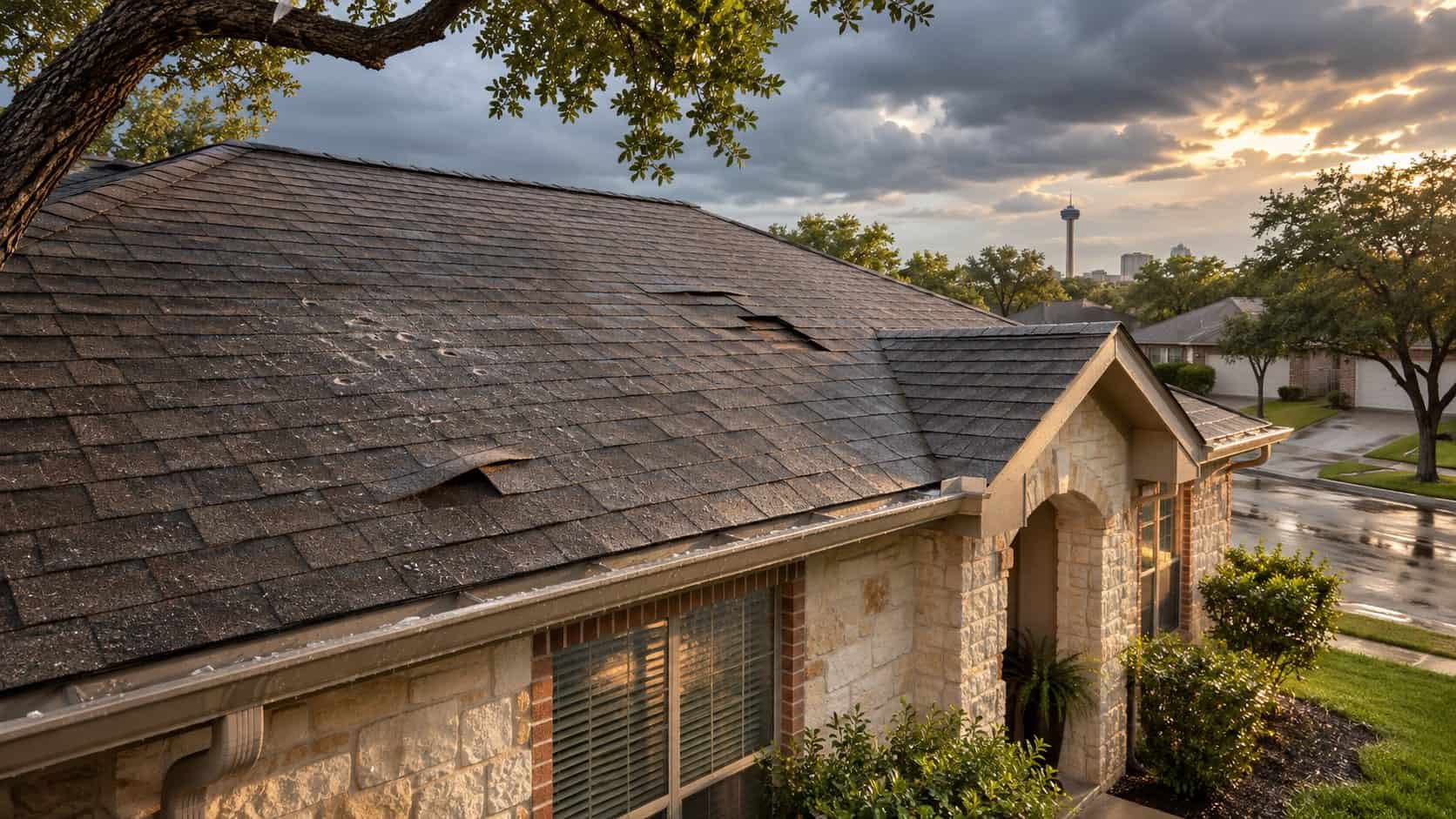
Storm Damage on a Roof in San Antonio: What to Check and What to Do Next
After hail, high wind, or heavy rain in San Antonio, roof damage is not always visible from the yard. A missing shingle is easy to spot; a lifted edge, damaged flashing, or a leak around a roof penetration may take a closer look. This guide explains what you can safely check, what to document, and when to request a professional inspection.
Start safely: look from the ground and inside the house
Wait until the storm has passed. Stay away from downed power lines, loose debris, and areas where the structure may be unstable. You do not need to climb onto the roof to start documenting a problem.
From the ground, look for:
- Shingles or roofing pieces in the yard
- Missing, shifted, or visibly lifted shingles along roof edges
- Dented gutters, downspouts, vents, or other metal surfaces
- Loose flashing near chimneys, walls, or roof transitions
- Branches resting on the roof or damage to fascia and soffits
Inside, check ceilings, upper walls, and the attic if you can access it safely. New stains, damp insulation, dripping, or a musty smell may point to water entry. Photograph what you find and note when you first noticed it.
Not every stain means the shingles failed
Water can enter around flashing, vents, pipe boots, skylights, or other roof openings. Overflowing or damaged gutters can also send water behind the fascia and make a roof problem look different from its actual source. The location of an interior stain does not always show the exact entry point, because water can travel before it becomes visible.
A roof repair inspection in San Antonio can help identify the source before a repair is recommended. If water is collecting at the roof edge, the gutter system should be checked as well.
Document storm damage before cleanup
Take wide photos of each affected area, then close photos of details you can reach safely. Include damaged roofing material on the ground, gutters, siding, windows, ceilings, and any interior water damage. Save the date of the storm, the date you found the damage, and receipts for temporary protective work.
The Texas Department of Insurance advises homeowners to photograph damage, protect the property from further harm, keep repair receipts, and speak with their insurance company before permanent repairs. Coverage and claim requirements depend on the individual policy.
Repair or replacement?
A repair may be appropriate when damage is limited to one area and the rest of the roof is sound. Widespread damage, repeated leaks, aging materials, or problems across several slopes may call for a broader evaluation. The right recommendation depends on what the inspection finds, including the condition of the roof beneath the visible surface.
If you are weighing those options, our roof repair versus replacement guide explains the main factors. For questions about documenting a storm-related scope of work, see our insurance claims assistance page. Your insurance company makes coverage decisions; a contractor can document damage and prepare a repair estimate.
What to do next
- Make sure everyone is safe and keep clear of electrical or structural hazards.
- Photograph visible damage before moving or discarding materials.
- Take reasonable temporary steps to keep more water out, and save receipts.
- Contact your insurer or agent if you may file a claim, and ask what it needs before permanent repairs.
- Request an estimate from Rooftop Roofing and Remodeling so the roof, drainage, and related damage can be evaluated.
If you want a closer look at less obvious warning signs, read our storm damage article on Medium.


